
If you are sensitive, easily offended, or a second- or third-year beekeeper, please DO NOT read this.
……Because ……
During the just-concluded series of public holidays, I not only lapped up the opportunity and tied up a number of loose ends on various projects, in the beekeepers’ workshop, and apiary, but also set up another beekeeper kiosk. ..….and relished the break!!!
And yes, …..for you too…. the second- or third-year beekeeper…..I didn’t forget you….indeed how could I?
I found myself reflecting on this … one-sided, unscientific, and misguided set of observations … on the knowledge base of beekeepers compared with the length of time they’ve been keeping bees.
….And my reflections looked something like this:
Fresher aka Monos!! – Sounds familiar?
First years – The beekeepers who know the least are the first years. No surprise there.
Many don’t know a worker bee from a drone – after all, these are housemates in the hive – but that’s okay because they are soaking up knowledge and learning fast. They read, attend some form of classes, ask questions and lean on their mentors. They are grateful for any help they can get.
If you are in your first year, are the patient investor type – you are on the right trail ….keep pushing..
You learn as you go. Beekeeping is a process. You try and fail or you try and succeed. And then you try something else. Enjoy the process and don’t worry about the end. There is no end. As you grow in it, yes, you could enjoy some handsome returns thats’ for sure!!!
……says a 2nd Generation Beekeeper!!
Read this – Advice For New Beekeepers
Second & Third Year Beekeepers – know the most
The beekeepers who know the most, those who actually know everything there is to know, are the second-and third-years. If there is a question, they have the answer.
If you have an opinion, they will let you know what they think of it – and of you. They don’t read, because they could write it better. They don’t listen, because they could say it better. Trust me, there is not one thing about bees that they don’t know. If you need a fast answer and confident opinion, they are the people to see.
I am happy for them as they revel in their vast knowledge.
Fourth Year – Graduation Time!
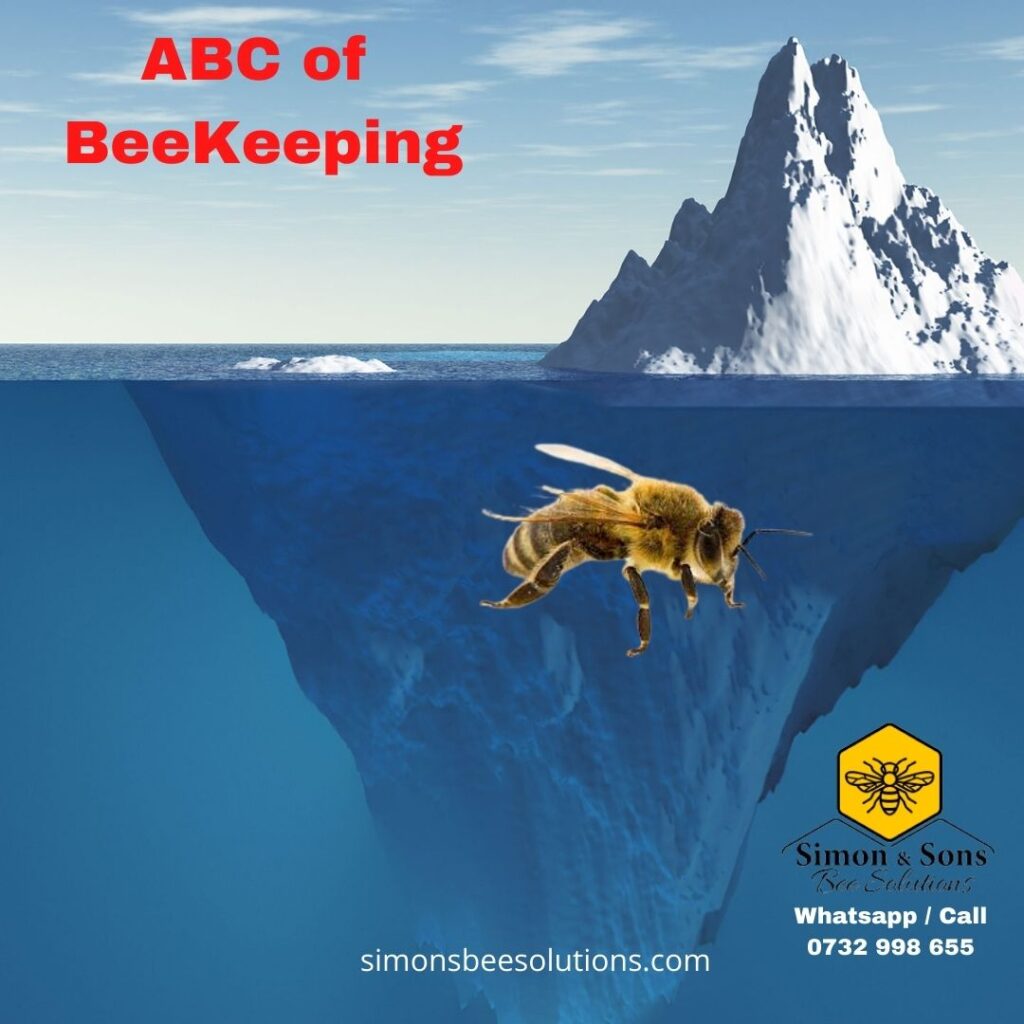
Then, somewhere about the fourth year, something happens – their knowledge begins to erode. It’s not that they know less, …. no … no …. it’s that they know so much that they begin to realize how much more there is to learn! It slowly dawns on them they’ve only been scratching the surface, they know only the tip of the iceberg.
They begin to see issues as complex rather than simple. They begin to see answers as multi-faceted, not smooth and round. The amount they want to learn slowly grows until it becomes infinite.
…….Welcome to beekeeping….. brothers, and sisters ……
Post-Graduate – No quick answers in beekeeping
Even as I looked at this journey, my mind kept wandering about a point, mama, my first beekeeping mentor unfailingly repeatedly mentioned : Learning takes time!
We learn beekeeping through experience, reading, experimentation, and making more than a few major mistakes. It’s cumulative. The more you know, the better you can guess, but you will never know it all.
Bees continue to surprise me. I am confused, and out-smarted by them …..constantly….., yet more often than not, I am also delighted and amazed.
Isn’t it this complexity and unpredictability of bees that make beekeeping so fascinating? Isn’t it the mystery and the surprising twists and turns that keep some of us in beekeeping year-in-year-out? And isn’t it this amazement of the hive that keeps us coming back for more?
Ph.D. – Simple answers don’t exist
People demanding simple answers do not understand how complex a bee colony is or how many ways it reacts to its ever-changing environment. No one-line answers exist, and those who insist on them will never be happy …..and LIKELY never stay with beekeeping.
As any long-time keeper will tell you, the more you learn about bees, the less you know because every answer raises a half-dozen new questions.
Emeritus – The Joy is in the journey
In beekeeping, as in many pursuits, it’s all about the journey. The processes of learning, developing skills, and sharing knowledge with others are much more satisfying than arriving at an artificial destination ……such as jars of honey or number of hives.
I know you know because perhaps, it’s the reason you’re still here, still learning, still working the hives, and, yes, still making mistakes. Me too.
Actually, I used to know just about everything. But once I began studying bee nutrition, pesticide interactions, reproduction, genetics, health, hygienic behavior, flower selection, pollen composition, communication, social interaction, bee nest-site selection, and environmental stressors ……
. . . well, let’s just say I know less and less every day.